How to “microbe- manage” your child

Nurturing your baby’s healthy bacteria
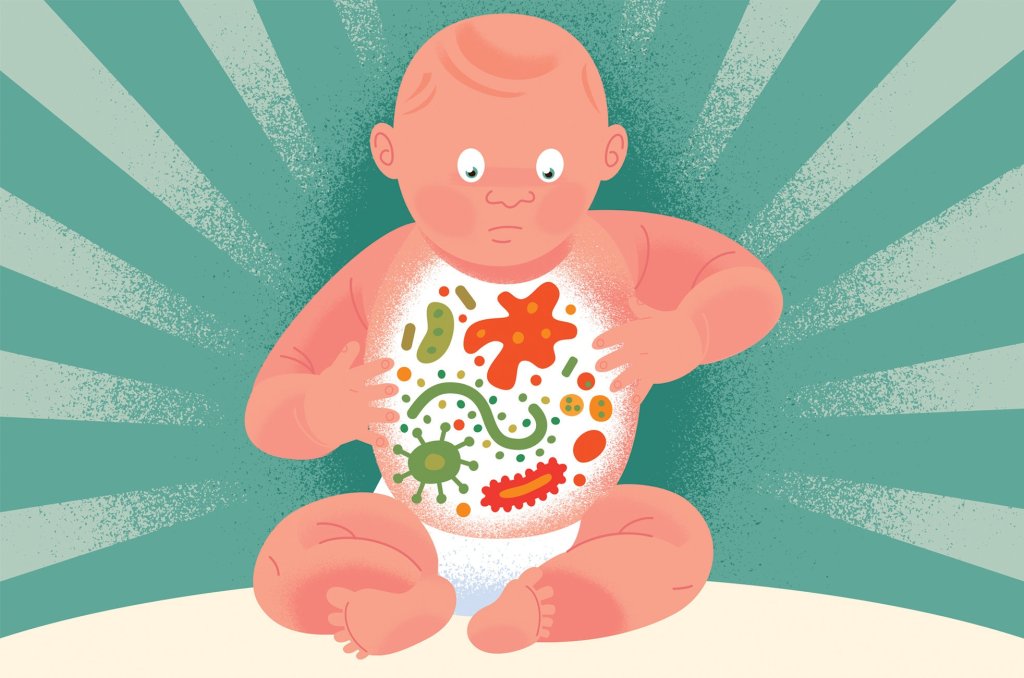
We all have heard of the gut microbiome by now, but how can it affect your child? And how can you contribute to this aspect of your child’s health? New research is shedding light on these very questions.

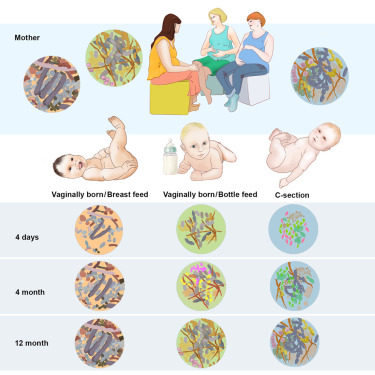
In a recent study conducted in Sweden, the gut microbiome of 98 infants was monitored during their first year of life, revealing some interesting findings about what factors contribute to an infant’s microbiome.

One of the major factors found that affects the bacteria found in an infant’s microbiome is the method of birth. Compared to infants who were birthed vaginally, the gut microbiota of infants delivered by C-section was found to be significantly different from their mothers. Another key factor impacting the infants’ microbiota composition was nutrition. Previously it was thought that the introduction of solid food was what started the maturation into an adult-like microbiome. However, this study revealed that the ending of breast-feeding is the true cause of this development. Researchers believed that this change is so significant because certain types of bacteria thrive on the nutrients found in breast milk. Once these nutrients are no longer available, other bacteria that are more commonly seen in adults are able to take over.
In another study , researchers reviewed research on how antibiotics contribute to changes in an infant’s gut microbiota. Antibiotics are by far the most common prescription drugs given to children, despite the fact these drugs are known to alter a child’s gut microbiome. It has been found that antibiotic use during infancy results in imbalances in gut microbiota, known as dysbiosis. Growing evidence has shown that this disruption may have long-term consequences on a child’s life, including obesity, allergies, and autoimmune diseases. Specifically, looking at the cause of allergies, it was found that the use of antibiotics may be killing good gut bacteria that is crucial for the maturation of immune cells. Without these cells, the immune system is more likely to overreact when confronted with allergens, resulting in the child developing allergies.

These researchers have created a diagnostic test to determine the developmental age of a baby’s gut microbiome, which will eventually be used to identify infants who are experiencing abnormal development. As the scientific community learns more about this topic, we will soon be able to use tools like this to guide treatment for infant microbiome dysbiosis.
The SuperVet

Hi animal lovers,


A 2018 episode of the podcast The Life Scientific featured Noel Fitzpatrick, more commonly known as `Supervet”, in which he talked about his life story and the process of creating bionic limbs for animals. Fitzpatrick was inspired to study veterinary medicine by the death of a lamb on his family’s farm, and later became passionate about creating bionic limbs for his patients due to his uncle being an amputee. He found that it takes a strange alchemy of compassion and problem-solving oriented intelligence, and was inspired by this challenge.

His wish was to create truly bionic limbs, as opposed to the traditional suction cup protheses. He collaborated with biomedical engineers utilizing a biomimetic to study how deer antler skin grows into bone when they are knocked off during the rutting season. This research provided Fitzpatrick with an answer to the main problem preventing bionic limbs, “How can infection be prevented when the skin grows onto the foreign object?” By collaborating with these researchers, he was able to solve this through a process of anchoring the metal to the skeleton, allowing the skin to bond onto the metal. This procedure was first performed on a cat named Oscar whose back legs had been crushed in a combine harvester. The procedure was wildly successful and Oscar became known as the “bionic cat”. This same procedure was later given to more animals and eventually a woman who had lost her arm in the Boston bombing.This is just one example of how veterinary medicine and human medicine can overlap, in which medical doctors and veterinarians can learn from each other to help provide better care to both humans and animals.

While there is a fine line between revolutionary medicine, and simply carrying out experiments on animals, Fitzpatrick strictly follows the guidelines of the Royal College of Veterinary Surgeons, in which any procedure must be in specific interest of the patient, and all other options must be explained to the family. While many vets prefer euthenasia, or more conservative solutions such as amputation, Fitzpatrick strives to provide more options to the client. Some veterinarians disagree with Fitzpatrick’s mission on ethical grounds, to which he responds, “If human medicine is going to move forward anyways…why are we denying our patients (animal) the choice?”. I believe that his work to reconverge human and animal medicine is helping to change the world of medicine for the better. 

All about me :)


Hi animal lovers! 

My name is Ally and I am a sophomore at the University of Miami studying Marine Science and Biology on the pre-veterinary track. I have dreamed of becoming a veterinarian ever since I can remember. This began with my love of animals and nature, and as I grew older, it only intensified as I realized my interest in science and my desire to have a career in which I can help both people and animals. I am very interested in conservation medicine and working to help protect and restore populations of endangered species. As an environmentalist, I am passionate about raising awareness for current issues including climate change, coral bleaching, and deforestation, and I am always looking for new ways to live a more sustainable and environmentally conscious lifestyle. This blog will document my pre-veterinary journey, and detail my increasing knowledge of veterinary medicine and techniques as I shadow at an animal hospital this semester. Additionally, I will talk about current environmental issues and how they relate to the veterinary profession. I hope to combine all of my interests in a “One Health” perspective, in which the health of animals, people, and the environment are closely intertwined.

Design a site like this with WordPress.com
Get started