Nurturing your baby’s healthy bacteria
We all have heard of the gut microbiome by now, but how can it affect your child? And how can you contribute to this aspect of your child’s health? New research is shedding light on these very questions.
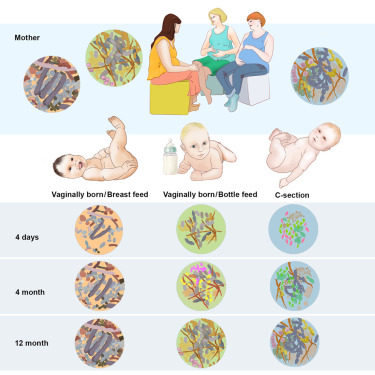
In a recent study conducted in Sweden, the gut microbiome of 98 infants was monitored during their first year of life, revealing some interesting findings about what factors contribute to an infant’s microbiome.
One of the major factors found that affects the bacteria found in an infant’s microbiome is the method of birth. Compared to infants who were birthed vaginally, the gut microbiota of infants delivered by C-section was found to be significantly different from their mothers. Another key factor impacting the infants’ microbiota composition was nutrition. Previously it was thought that the introduction of solid food was what started the maturation into an adult-like microbiome. However, this study revealed that the ending of breast-feeding is the true cause of this development. Researchers believed that this change is so significant because certain types of bacteria thrive on the nutrients found in breast milk. Once these nutrients are no longer available, other bacteria that are more commonly seen in adults are able to take over.
In another study , researchers reviewed research on how antibiotics contribute to changes in an infant’s gut microbiota. Antibiotics are by far the most common prescription drugs given to children, despite the fact these drugs are known to alter a child’s gut microbiome. It has been found that antibiotic use during infancy results in imbalances in gut microbiota, known as dysbiosis. Growing evidence has shown that this disruption may have long-term consequences on a child’s life, including obesity, allergies, and autoimmune diseases. Specifically, looking at the cause of allergies, it was found that the use of antibiotics may be killing good gut bacteria that is crucial for the maturation of immune cells. Without these cells, the immune system is more likely to overreact when confronted with allergens, resulting in the child developing allergies.
These researchers have created a diagnostic test to determine the developmental age of a baby’s gut microbiome, which will eventually be used to identify infants who are experiencing abnormal development. As the scientific community learns more about this topic, we will soon be able to use tools like this to guide treatment for infant microbiome dysbiosis.
 Ally's Blog